
The Pivotal Role of Decentralized Zero-Knowledge Proof Protocols in Maintaining Absolute Data Privacy on a Secure Blockchain Portal
Core Mechanics of zk-Proofs in Decentralized Systems
Zero-knowledge proofs (ZKPs) allow one party to prove a statement’s truth without revealing any underlying data. In decentralized environments, this eliminates the need to expose sensitive credentials to third parties. For instance, a user can verify they are over 21 without showing their birth date or ID number. This cryptographic method relies on mathematical algorithms that generate a proof and a verifier that checks it. The decentralized nature ensures no single entity controls the verification process, distributing trust across the network. Combined with blockchain’s immutability, ZKPs create a framework where data remains confidential yet verifiable, crucial for applications like finance, healthcare, or identity management on a smart trading portal.
Decentralized ZKPs use either interactive or non-interactive protocols. Non-interactive versions, like zk-SNARKs, require a single message submission, making them efficient for blockchain. They rely on a trusted setup phase, but newer variants like zk-STARKs remove this assumption, enhancing security. The proof size and verification time are critical; modern implementations achieve sub-second verification, enabling real-time privacy. This efficiency is essential for portals handling high transaction volumes, where speed and confidentiality must coexist.
Privacy Architecture on Secure Blockchain Portals
Data Minimization and Selective Disclosure
Secure portals leverage ZKPs to implement data minimization. Instead of storing raw personal data on-chain, a user submits a zero-knowledge proof that their credentials meet certain criteria. For example, a financial portal can confirm a user’s solvency without revealing their exact balance. This reduces attack surface: even if the blockchain is compromised, no exploitable personal data exists. The proof itself is stored as a compact cryptographic string, ensuring on-chain efficiency.
Auditability Without Exposure
Regulatory compliance often requires transaction audits. ZKPs solve this by allowing auditors to verify that rules were followed (e.g., anti-money laundering checks) without seeing the underlying transactions. A portal can generate a proof that all trades comply with KYC norms, while individual user identities remain hidden. This balance between transparency and privacy is unattainable with traditional encryption alone, which either hides everything or reveals everything.
Practical Implementation and Challenges
Deploying decentralized ZKPs requires careful parameter selection. Proof generation is computationally intensive, often needing specialized hardware for mobile users. Layer-2 solutions like zk-rollups bundle multiple transactions into a single proof, reducing on-chain load. However, the trusted setup for zk-SNARKs remains a point of contention; alternatives like zk-STARKs avoid this but increase proof size. Portals must choose protocols based on their threat model-whether they prioritize speed (SNARKs) or trustlessness (STARKs).
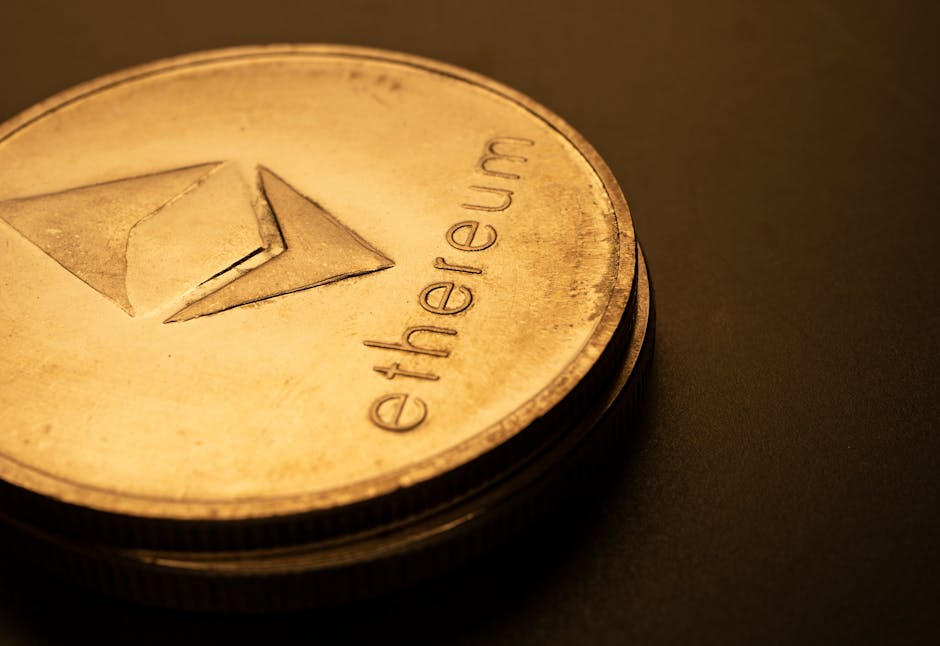
Integration also demands user education. Many still mistake zero-knowledge for encryption, not understanding that ZKPs prove knowledge without revealing it. Clear UI/UX design is needed to convey this. For instance, a portal might display “Your identity is verified without sharing your data” rather than technical jargon. Despite these hurdles, major blockchains like Ethereum have adopted ZKPs for privacy-focused smart contracts, signaling a maturing ecosystem.
FAQ:
How do zero-knowledge proofs differ from encryption?
Encryption hides data but requires decryption for verification, exposing the data. ZKPs verify correctness without ever revealing the data itself, even to the verifier.
Can ZKPs be used for identity verification on a blockchain portal?
Yes. A user can prove they hold a valid passport or meet age requirements without uploading the document, using a cryptographic proof.
Are zero-knowledge proofs quantum-resistant?
Some variants like zk-STARKs are considered quantum-resistant due to their reliance on hash functions, while zk-SNARKs may be vulnerable to quantum attacks.
What is the main bottleneck in adopting ZKPs?
Proof generation time and computational cost. Mobile devices may struggle, though hardware acceleration and improved algorithms are mitigating this.
Reviews
Alex T.
Switched to a portal using zk-STARKs. No more exposing my trading history. Verification takes 2 seconds, and I feel in control.
Maria K.
As a compliance officer, ZKPs let me audit transactions without seeing private data. A game-changer for regulatory reporting.
James L.
Initially skeptical about proof generation speed, but the latest updates cut it to under a second. My data stays mine.